






Dogs with ringworm or yeast infections
Fungal skin disease is common in Pune’s humid months. Your vet confirms it and often recommends regular anti-fungal baths alongside any other treatment.
The short answer
A medicated bath uses an anti-fungal or anti-bacterial shampoo that must stay on the skin for several minutes to work, which is why it is a separate step from a normal wash. At Sniffy it is a ₹299 add-on to the ₹799 Spa Bath, ₹1,098 together, for dogs and cats. It is done on your vet’s advice. We apply it; your vet diagnoses and decides how long to continue.
It is a treatment step, not a luxury. It is used when the skin is the problem and a plain shampoo is not enough.
Fungal skin disease is common in Pune’s humid months. Your vet confirms it and often recommends regular anti-fungal baths alongside any other treatment.
Red, spotty or pustular skin, often after scratching. A medicated shampoo helps reduce the bacteria on the surface while the vet treats the underlying cause.
Allergies, seborrhoea and recurring hot spots can need maintenance baths on a vet’s schedule to keep the skin under control.
Cats can carry ringworm, which also passes to people. Medicated baths for cats are done gently, only when advised and in a closed room.
Heavy scratching can leave raw or infected skin. The vet may suggest a medicated bath once the parasites are controlled.
Persistent odour with greasy, flaky skin is a skin issue, not a dirt issue. A vet visit comes first; a medicated bath may follow.
The difference between a good and a pointless medicated bath is almost entirely contact time and rinsing. Here is how it runs.
The groomer asks what your vet diagnosed and recommended, and uses the product they suggest if you have one. If there is no vet advice, we recommend seeing one first.
The entire coat is wetted to the skin with lukewarm water. A medicated shampoo applied to a half-wet coat does not reach the skin.
The shampoo is worked down to the skin everywhere, including skin folds, the belly, between the toes and under the tail, while avoiding the eyes and ears.
Most medicated shampoos need to sit on the skin for several minutes, often around ten, to work. The groomer sets a timer and keeps your pet comfortable and warm.
Residue irritates skin. The groomer rinses far longer than for a normal bath, until the water runs completely clear.
Damp skin feeds fungus. The coat is dried completely to the skin, with a warm, not hot, dryer, and your pet is kept away from damp bedding.
One flat add-on on the bath. If your vet has prescribed a specific shampoo, you can provide it and we will use it as directed.
Spa Bath ₹799 + Medicated Bath ₹299 = ₹1,098. A medicated bath is not a diagnosis or a cure; keep following your vet’s treatment plan. No doorstep charge, no size surcharge.
Published, fixed prices — the same across every area of Pune we cover. Dog grooming in Pune starts at ₹799, there is no doorstep or travel fee, and payment is taken at the end of the session by cash or UPI once you have seen the work.
₹799 ₹999
₹999 ₹1199
₹1299 ₹1499
Add-ons are quoted before the groomer starts, never added at the end.
Prices, coverage & reviews last updated
Pune seasons
Humid months and the skin they favour
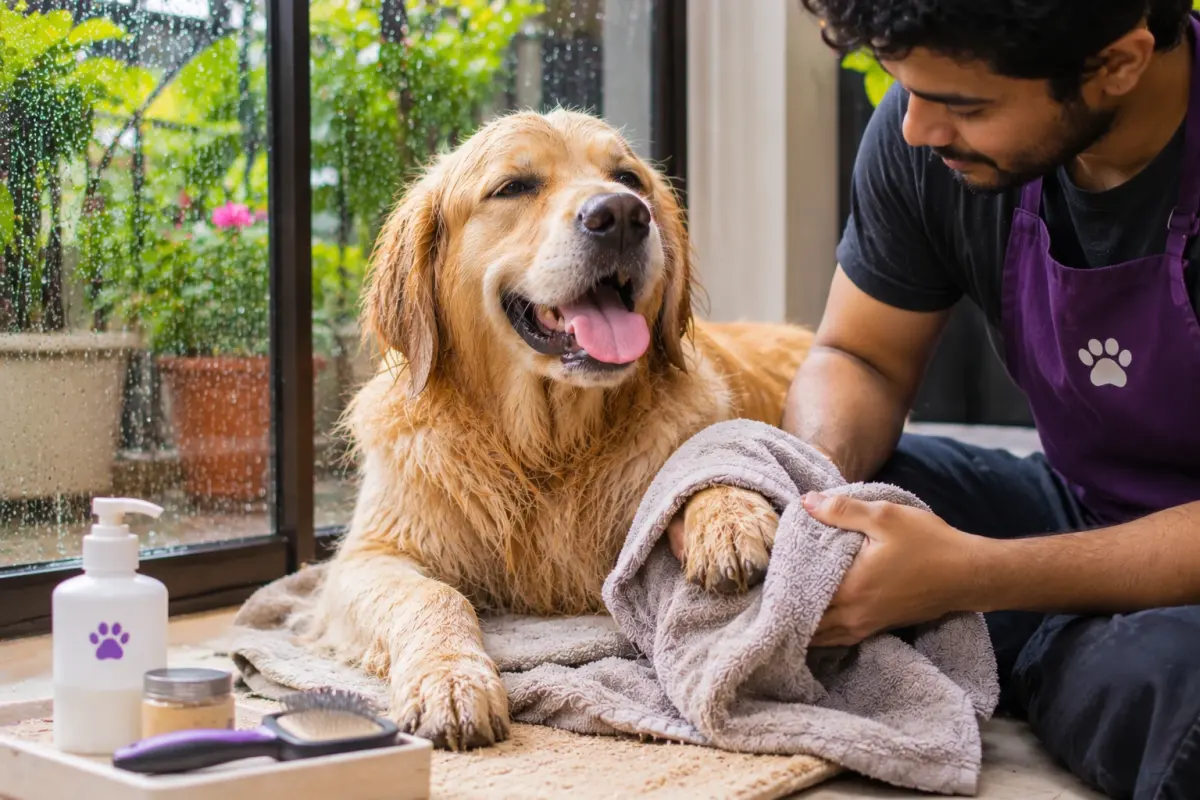
Pune’s monsoon traps moisture in the coat for hours after a walk, and between the toes, under the belly and in skin folds it can stay damp all day. Fungus and bacteria thrive in warm damp skin, and the result shows up as itching, redness, hair loss, a musty smell or rings of flaky skin.
Pets with thick coats, floppy ears and skin folds are especially prone: Labradors, Pugs, Bulldogs, Cocker Spaniels and Shih Tzus. Dogs that swim or get wet often also suffer more.
A vet visit is always the right first step. A medicated bath works best as part of a plan the vet has made, not as a guess.
The earlier it is treated, the shorter the treatment and the smaller the patch.
Services explained
The step that decides if it works
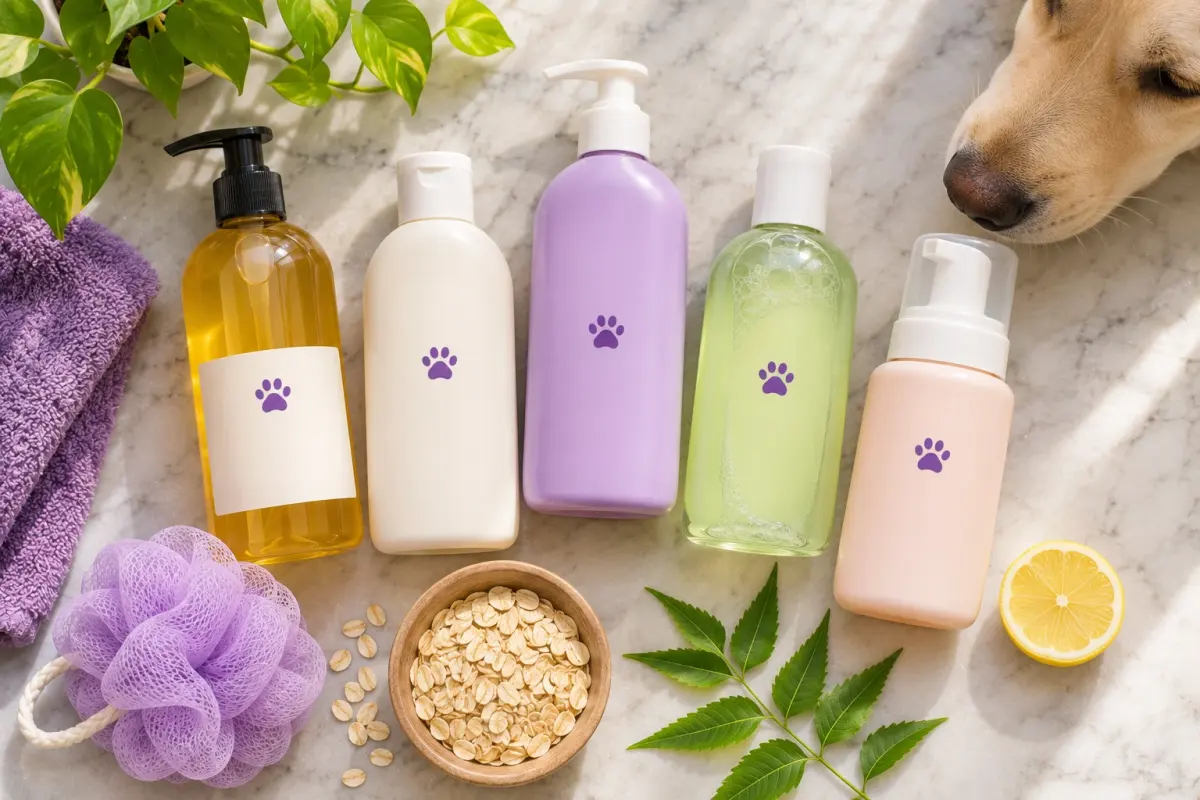
Medicated shampoos contain active ingredients such as chlorhexidine or antifungals that need time on the skin to work. A normal bath lasts a few minutes; a medicated bath needs the shampoo to sit on the skin for its full label time, which is often around ten minutes.
That is why a medicated bath takes longer, and why one rushed at the end of a normal bath does very little. The groomer sets a timer, keeps your pet warm and comfortable, and does not rinse early.
The same applies to the rinse. Leftover shampoo irritates skin, especially skin that is already inflamed. We rinse longer than feels needed.
A medicated bath done in a hurry is a normal bath with a higher price. Ours takes the time it needs.
What we do
Being honest about its limits
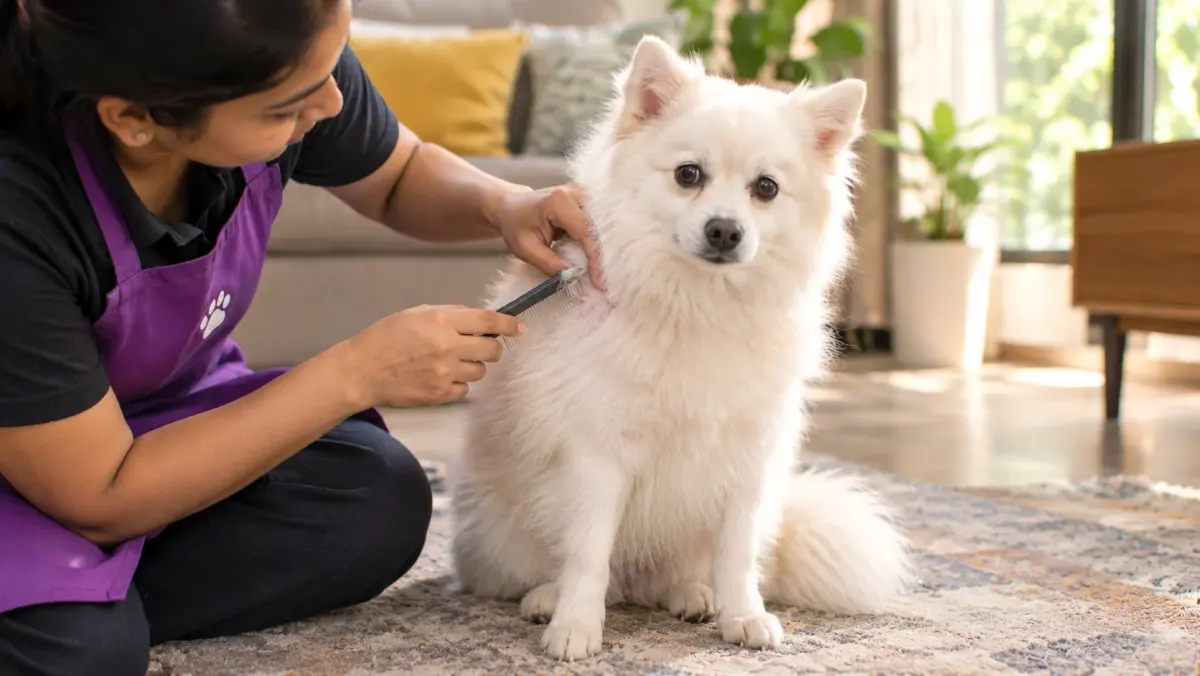
It cannot diagnose. A groomer sees skin, not the cause. Red skin can be allergy, fungus, bacteria, mites, a hormonal problem or a reaction to food, and the treatments are different. Only a vet can sort them out, sometimes with a skin scrape or test.
It cannot replace prescribed medicine. Many fungal and bacterial infections need tablets, ointments or a longer course. The bath supports that treatment; it is not the treatment.
And it cannot fix a problem that is going on at home. Damp bedding, an untreated flea allergy or the wrong diet will bring the skin problem back however many baths you give.
Cat grooming
Handle with extra care
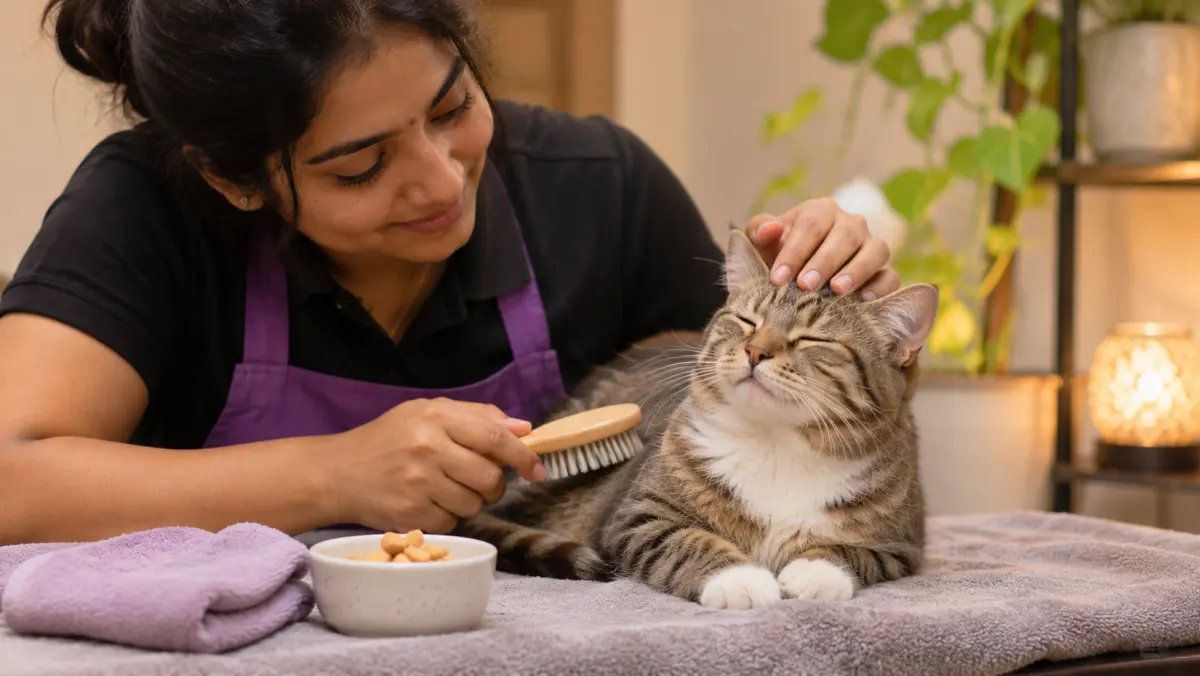
Ringworm and skin infections are less common in cats but harder to treat, and ringworm can pass to humans. The vet decides the plan; the bath is a supporting step and only if advised.
Cats do not always tolerate long contact times in water. The groomer works in a closed room, with warm water and a calm pace, and stops if the cat becomes distressed. We never sedate a cat for a bath.
If someone in the household has an itchy circular rash while a cat has skin trouble, mention it to your doctor and your vet.
With cats, a short, calm bath done carefully is better than a thorough one done under stress.
Grooming frequency
Your vet sets the schedule
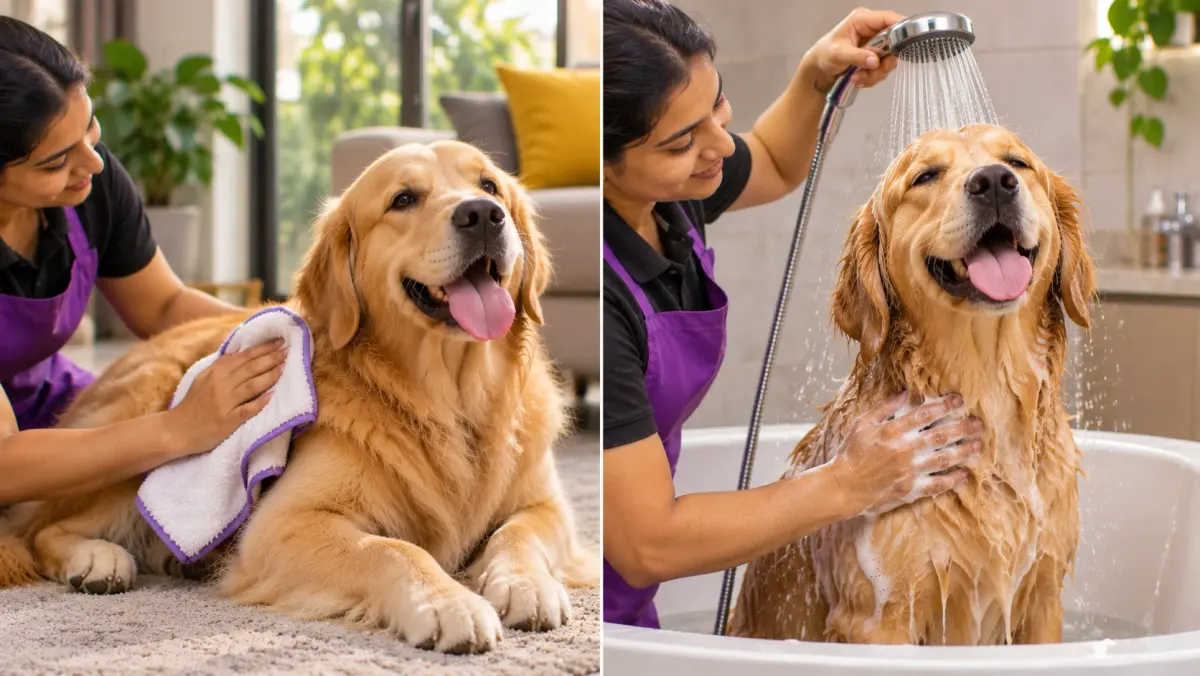
It depends on the condition and the product. Some courses ask for a bath once or twice a week for several weeks; maintenance for a long-term condition may be every two to four weeks. We follow the schedule your vet gives.
Too frequent bathing can dry the skin, and too little lets the problem return. Do not extend or shorten a course because the skin looks better; many infections look fine long before they are gone.
Between baths, keep the coat dry, change bedding often and avoid long wet walks if your pet’s skin is vulnerable.
When in doubt, ask your vet how many baths and for how long, and tell the groomer.
A Medicated Bath is a ₹299 add-on to the ₹799 Spa Bath, ₹1,098 in total, for dogs and cats. There is no size surcharge or doorstep charge.
Yes, we strongly recommend it. A medicated bath is a treatment step for a diagnosed skin condition. Skin problems have many causes and the wrong treatment can make things worse. Please see a vet first if you have not.
Yes. Keep it ready and tell us when you book. The groomer uses it as the label and your vet’s directions say, including the contact time.
Roughly an hour and a half to two hours, because the shampoo has to stay on the skin for its full contact time and the rinse and drying are thorough. Large or thick-coated dogs take longer.
It supports treatment but rarely cures on its own. Many infections need medication from your vet as well. Keep following your vet’s plan, and book follow-up visits if they advise.
As often as your vet tells you. Some courses are once or twice a week for a few weeks; maintenance may be every two to four weeks. We follow your vet’s schedule.
It can be, with the right product and a vet’s advice. Cats are bathed in a closed room, kept warm, and we stop if the cat is too stressed. We never sedate a cat.
Not necessarily. A bad smell can be dirt, ears, teeth, anal glands or a skin infection. Have a vet look first. If the cause is skin, a medicated bath may follow.
Yes, ringworm is a fungal infection that can pass from pets to people. Wash your hands after handling your pet, avoid sharing bedding and see a doctor if you notice a circular itchy rash. Tell the groomer if your pet has ringworm.
Keep your pet in a clean, dry place, change bedding and follow your vet’s advice on medication. Wash bedding regularly, avoid damp areas and watch for skin changes. If things get worse, go back to your vet.
The same groomers, prices and approach in all 43 localities. Pick your area for the roads, societies and weather we plan around.