




SPA BATH
₹799 ₹999
- Bath With Premium Shampoo
- Nourishing Coat Conditioner
- Blow Dry
- Combing/ Brushing
- Nail Clipping
- Eye & Ear Cleaning
- Paw Massage
- Mouth Spray
- Spritz of Perfume
Also serving nearby: NIBM, Ambegaon, Kondhwa, Narhe, Dhayari, Bibewadi.
Published, fixed prices — the same across every area of Pune we cover. Cat grooming in Katraj starts at ₹799, there is no doorstep or travel fee, and payment is taken at the end of the session by cash or UPI once you have seen the work.
₹799 ₹999
₹999 ₹1199
₹1299 ₹1499
Add-ons are quoted before the groomer starts, never added at the end.
Prices, coverage & reviews last updated
Cat grooming
Time to do it properly.
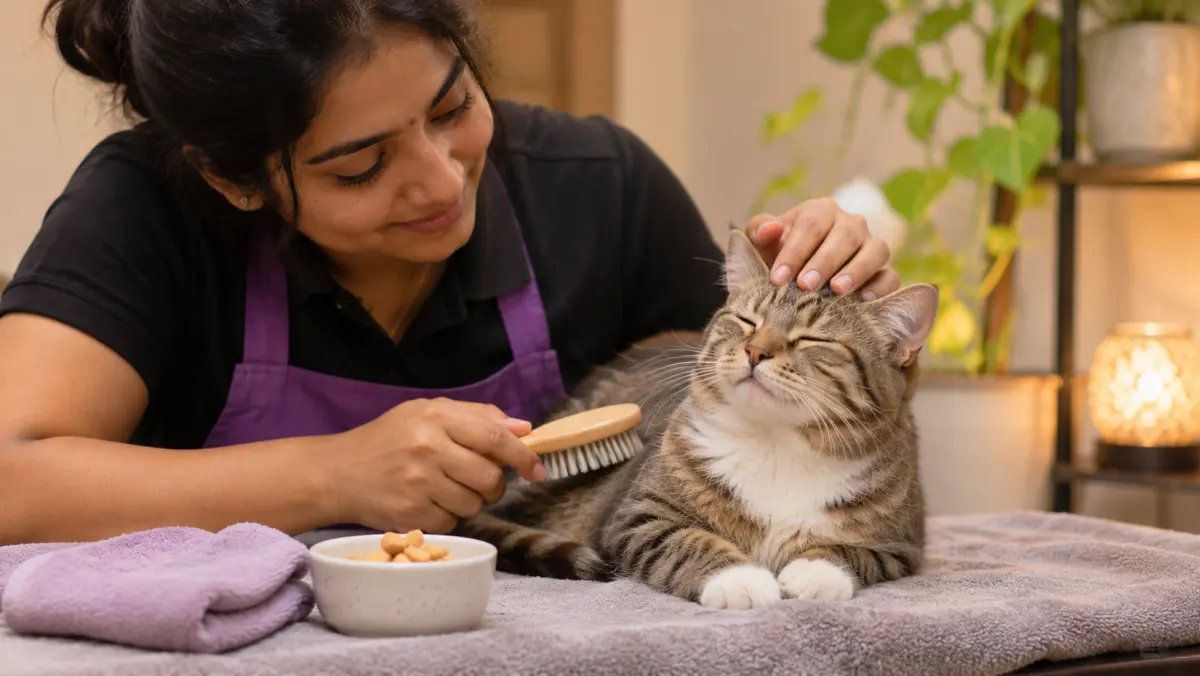
Katraj has expanded rapidly and is now a fully-formed residential area, but grooming services haven't matched that growth. Cat owners here have been DIY-grooming, travelling far, or simply going without regular professional sessions. Sniffy's in-home cat grooming in Katraj fills that gap — trained groomers, proper equipment, professional sessions at your home.
Pune seasons
Humidity and seasonal changes managed.
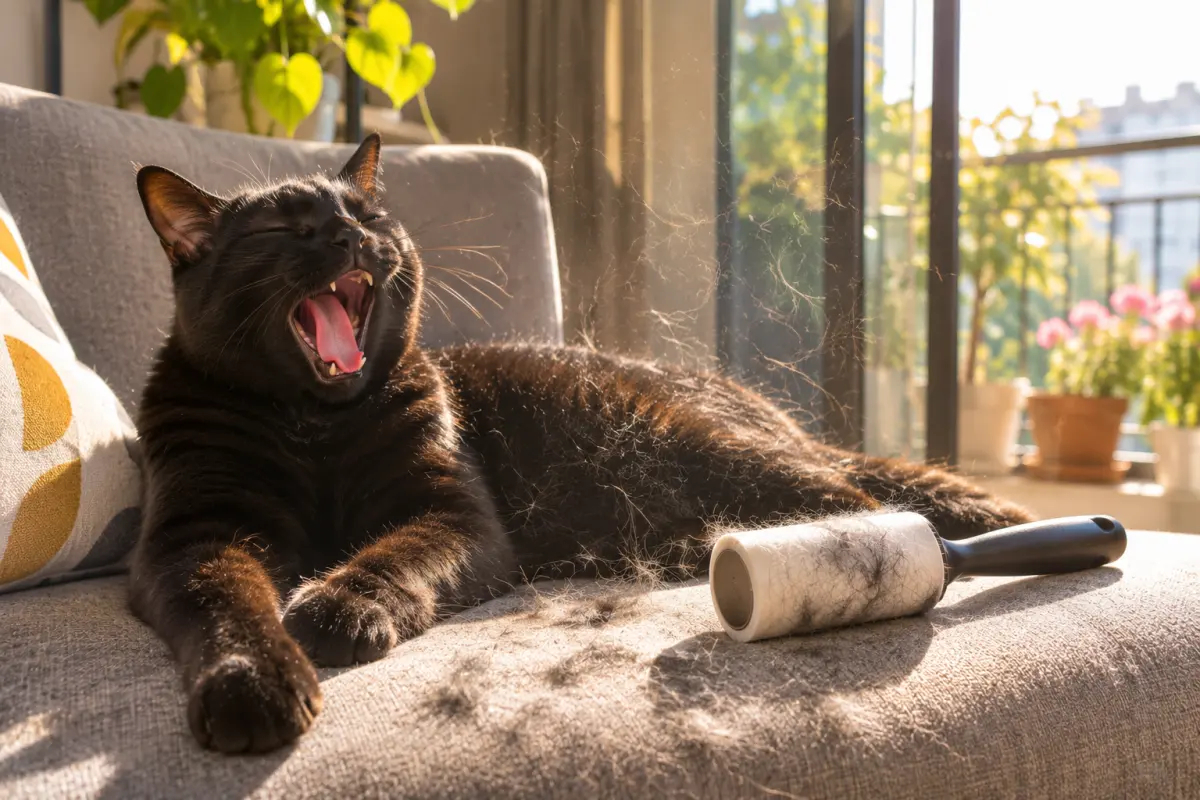
Katraj sits in south Pune where the climate tends toward higher humidity during monsoon months. For longhair cats, this humidity accelerates mat formation — a coat that was manageable in February can develop serious tangles by July without regular professional sessions. We adjust our approach seasonally, using lighter conditioning rinses in humid months and heavier conditioning treatments in the drier winter months.
Pune seasons
Katraj's tick season is longer than the rest of Pune's.
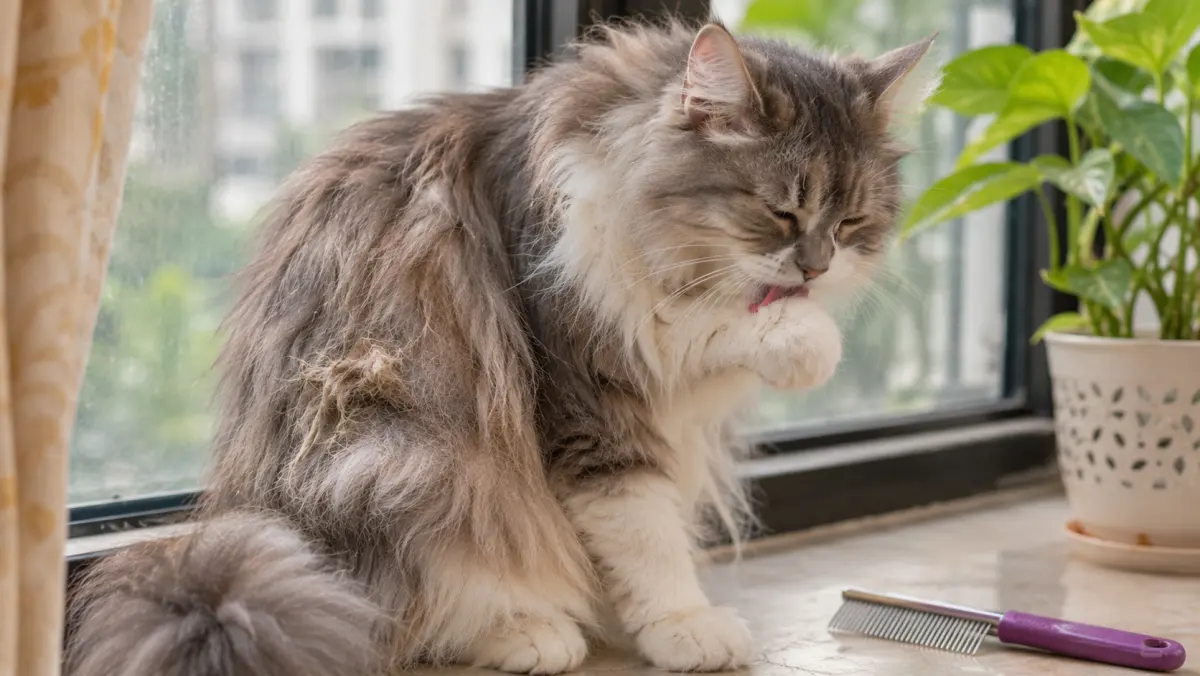
The hill slopes, the scrub along the bypass and the green belt around the lake are the best thing about living here. They are also a permanent tick reservoir, and the ground under that tree cover stays damp for weeks after the rest of the city has dried out. The practical result is that tick season in Katraj starts earlier and runs later than it does in central Pune, and cats with any outdoor access here pick them up in months when a Kothrud cat would not.
Cats are harder to check than dogs, because a tick on a cat is usually not on the body at all. They lodge where the fur is thinnest and the cat cannot reach — inside the ear flap, in the fold under the chin, at the corner of the eye, between the toes. We check those five places at the start of every Katraj session, before the coat is wet, because a tick is far easier to spot on dry fur. If we find one we remove it properly with the mouthparts intact rather than pulling, show you where it was, and tell you honestly if the site looks inflamed enough to need a vet. What we do not do is sell you a preventive treatment; that is a conversation for whoever knows your cat's medical history.
By breed
A wide spread, from bypass flats to hillside houses.
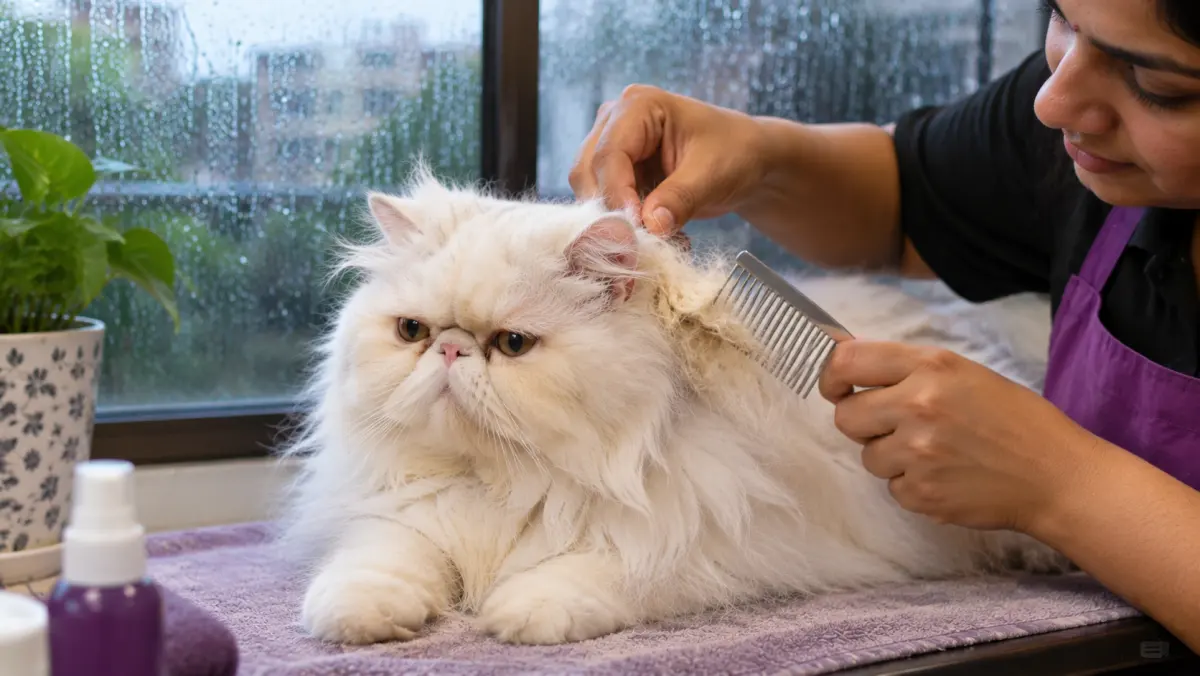
Katraj covers a lot of ground and the cat population changes as you move through it — older housing near the gaon, newer societies along the bypass, independent houses climbing towards the hills. These are the coats we handle most:
Hillside cat, bypass flat cat, or the one who adopted your building — all the same to us once we see the coat.
Services explained
Step by step, in the order it happens.
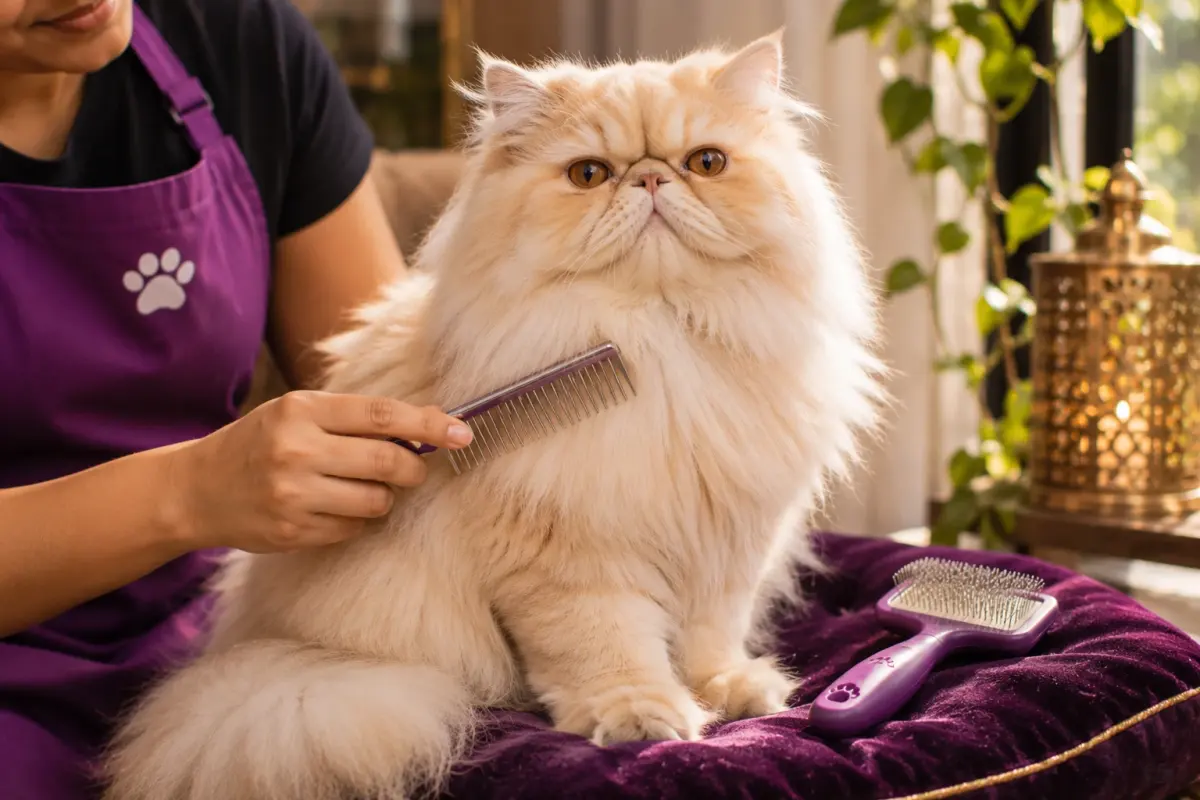
People book more confidently when they know what is coming, so here is the whole sequence. The groomer arrives, greets you, and then largely ignores the cat for the first few minutes while unpacking — that is deliberate, and it lets the cat come and investigate rather than being approached.
Then: a dry inspection of coat, skin, ears, eyes, paws and claws, with anything notable pointed out to you before we start. Claws are trimmed first, while the cat is still dry and calm, because it is the step most likely to end patience. A dry brush-out follows to lift loose fur and locate mats. Any mat that can be worked loose is worked loose; anything tight against the skin is clipped out rather than pulled, and we will ask you before clipping. The bath comes next, in your bathroom with lukewarm water and cat-specific shampoo, then a long rinse and a conditioner. Drying is on low heat, on a mat, with the noise kept as far from the cat's head as possible. Ears are cleaned once the cat is dry and settled. A sanitary trim if needed, a final comb-through, and a short honest summary from the groomer about what they found.
Start to finish it runs about 60 to 90 minutes for one cat, longer for a heavily matted longhair. We clean up as we go, so the last five minutes are packing rather than mopping.
Butter is a cream Persian who had developed bad mats during the monsoon season. I'd been trying to manage them at home with very limited success. The groomer removed every single mat over the course of a 2-hour session without cutting any of them — pure patience and skill. The coat underneath was actually in good condition, just hidden by the matting.
Samosa is an Indie rescue who is generally suspicious of everything and everyone. The groomer spent the first 15 minutes just sitting near him, letting him get used to her presence. By the time she actually started the grooming he was much calmer than expected. Not a perfect session but a genuinely good one given his background.
Humidity during monsoon months accelerates mat formation in longhair cats and increases skin fungal issues in all breeds. We recommend more frequent grooming during the June-September period — every 4–5 weeks for longhair cats rather than the usual 6–8. We use antifungal shampoos as a preventive measure during this period for at-risk cats.
Ear cleaning is often the least tolerated part of grooming. We use a very gentle technique with minimal product insertion and work quickly once the cat is positioned. If a cat truly won't allow ear cleaning, we do what we can and note it for the owner to follow up with a vet.
Yes, and we will. At the end of every session we give an honest assessment of coat condition, any issues we noticed (skin, ears, nails, eyes), and recommendations for follow-up care. We're not here to make you feel bad — we're here to give your cat what they need.
Belly mats are the hardest ones, because the skin there is thin and loose and the cat is at her most defensive lying on her back. We do not force it. The groomer will work from the side with the cat standing or lying on her flank, use a clipper rather than a comb to take the mat off close to the skin, and go in short attempts with breaks rather than one long struggle. If she genuinely will not permit it, we will say so and recommend a vet who can do it under light sedation — that is a better outcome than a cut on a wriggling cat, and we would rather refer you than take the risk.
Yes — Katraj gaon, the bypass societies, Katraj Kondhwa Road, Narhe, Ambegaon and the stretch towards Sinhagad Road are all on our route, along with Bibewadi and Kondhwa on the other side. The hillside addresses take a little longer to reach, so we build that into the arrival window rather than turning up late.
Give it about a week to ten days after a vaccination before a full bath. It is not that grooming is dangerous — it is that a cat can be a little off-colour or sore at the injection site for a couple of days, and a bath plus a dryer plus a stranger on top of that is more than a young cat needs in one week. If your kitten is on a course of shots, the gap between doses is usually the most comfortable window. Just tell us the dates at booking and we will place the slot sensibly.
It lengthens it noticeably. The Katraj ghat side holds moisture longer than the flatter parts of the city, and a longhair coat that feels dry to the hand can still be damp against the skin — which is exactly how fungal patches start. We dry to the skin rather than to the touch, and here that stage simply takes longer.
It does, and it is the reason we rinse for longer here. Hard borewell water leaves mineral deposit that dulls the coat and leaves skin itchy even when the rinse felt thorough — a common complaint across the Katraj belt. A conditioning rinse at the end counters most of it.
Fleas and ticks above all, which is why we inspect before we wash rather than after. Contact with free-ranging cats in this belt raises exposure considerably. The check covers between the toes, both ear canals, the jawline and the tail base, and if we find anything we show you where rather than treating it silently.
Late morning through early afternoon is the most reliable window for a groomer to reach you on time. The inbound morning peak and the 6 to 8 PM return are where slot timings slip. We would rather give you an honest window than a precise time we cannot hold.
A light meal two to three hours before, and nothing immediately beforehand. A full stomach plus handling and being turned over makes some cats nauseous, and a very hungry cat is restless and harder to settle. Feed properly once the session is done and the coat is dry — most cats eat and then sleep it off.
Honest, practical advice from the groomers who visit Pune homes every day.