




SPA BATH
₹799 ₹999
- Bath With Premium Shampoo
- Nourishing Coat Conditioner
- Blow Dry
- Combing/ Brushing
- Nail Clipping
- Eye & Ear Cleaning
- Paw Massage
- Mouth Spray
- Spritz of Perfume
Also serving nearby: Baner, Khadki, Shivajinagar, Pimple Saudagar, Wakad, Pashan.
Published, fixed prices — the same across every area of Pune we cover. Cat grooming in Aundh starts at ₹799, there is no doorstep or travel fee, and payment is taken at the end of the session by cash or UPI once you have seen the work.
₹799 ₹999
₹999 ₹1199
₹1299 ₹1499
Add-ons are quoted before the groomer starts, never added at the end.
Prices, coverage & reviews last updated
Cat grooming
Cats who know their neighbourhood.
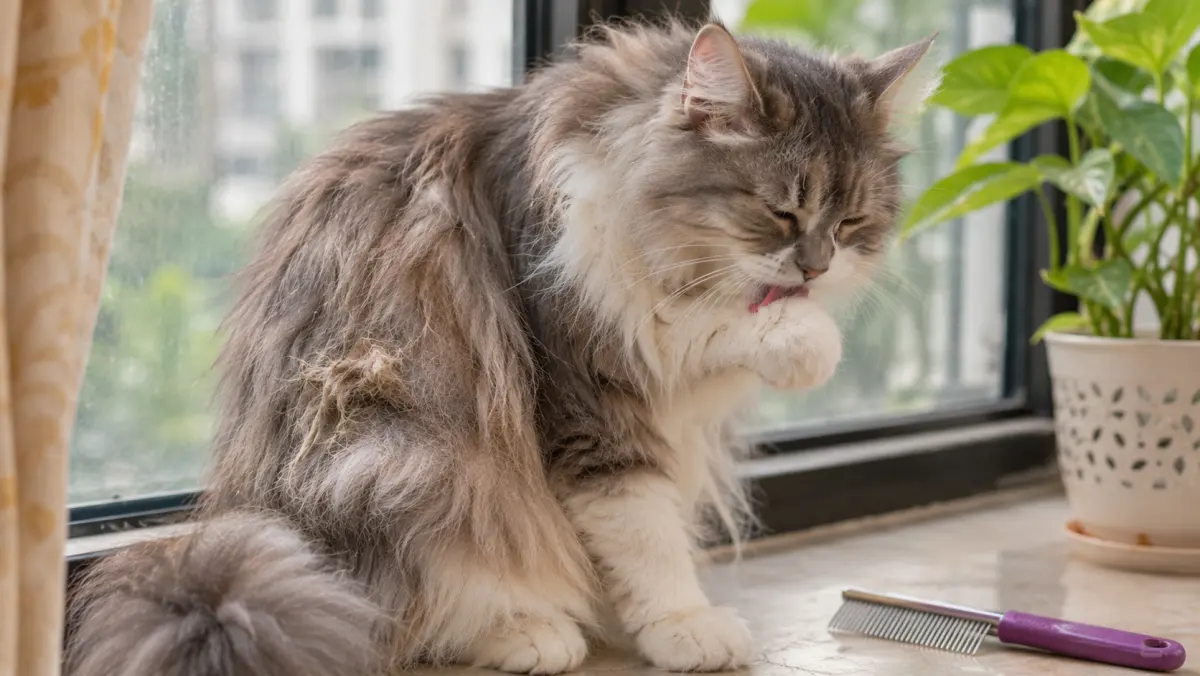
Aundh is one of Pune's older, better-established residential areas — wide roads, mature trees, and a community feel that extends to its pet-owning population. The cats here are well-loved and, often, quite set in their ways. Any disruption to their routine is taken seriously. At-home cat grooming in Aundh is the obvious solution — familiar environment, familiar smells, one groomer who comes and goes. No disruption to the territory, no recovery period after a stressful salon visit.
Services explained
Not a quick wash. A complete service.
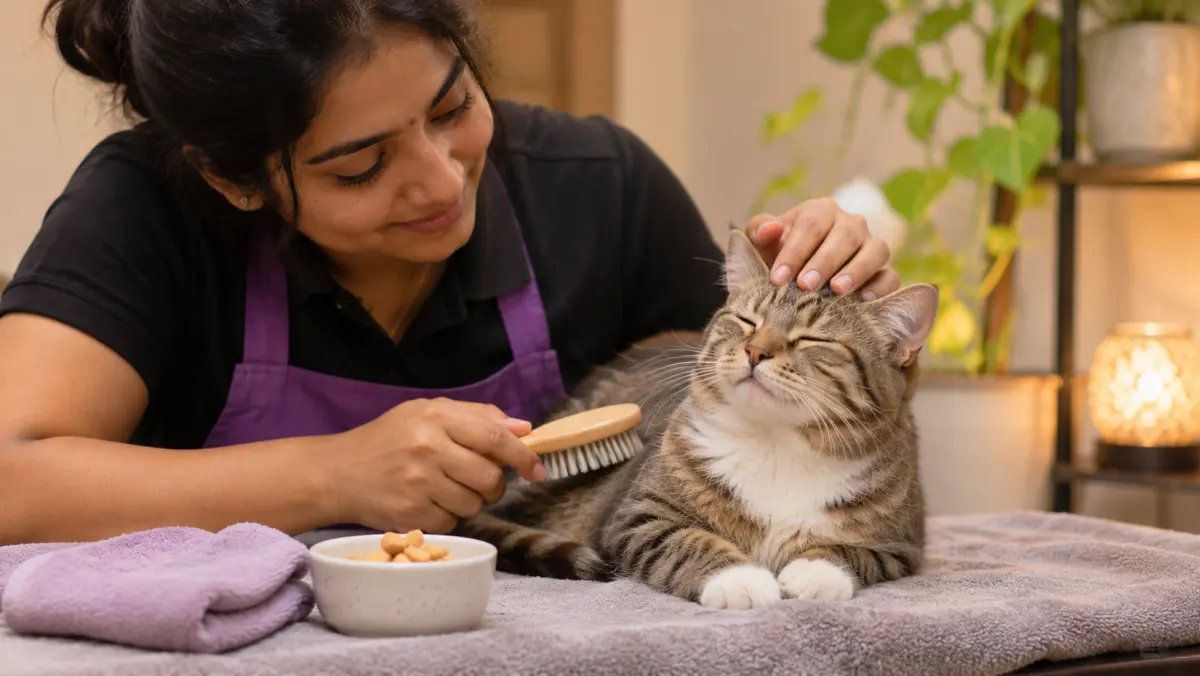
We sometimes encounter cat owners who have tried home grooming services before and were disappointed. Usually the issue was an incomplete session — bath only, or bath and nails, skipping ears or coat assessment. Our sessions in Aundh are comprehensive by design — bath, blow-dry, brushing, de-matting if needed, nail trim, ear cleaning, eye area wipe, and a coat condition assessment at the end. We don't skip steps because they're inconvenient.
By breed
Classic Pune area, varied cat population.
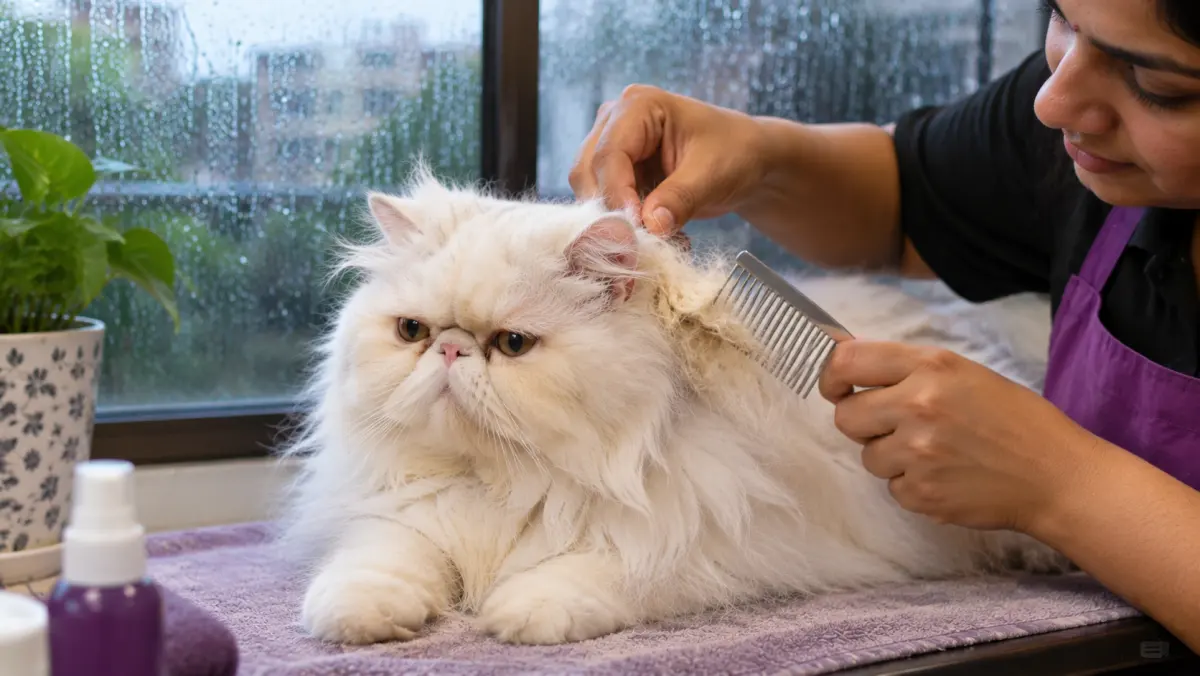
Aundh has a lovely spread of cat breeds. Here's how we handle the most common:
All of Aundh, Pimple Saudagar side, Anand Park area — all covered.
Cat grooming
It is recoverable. It just takes more than one visit.
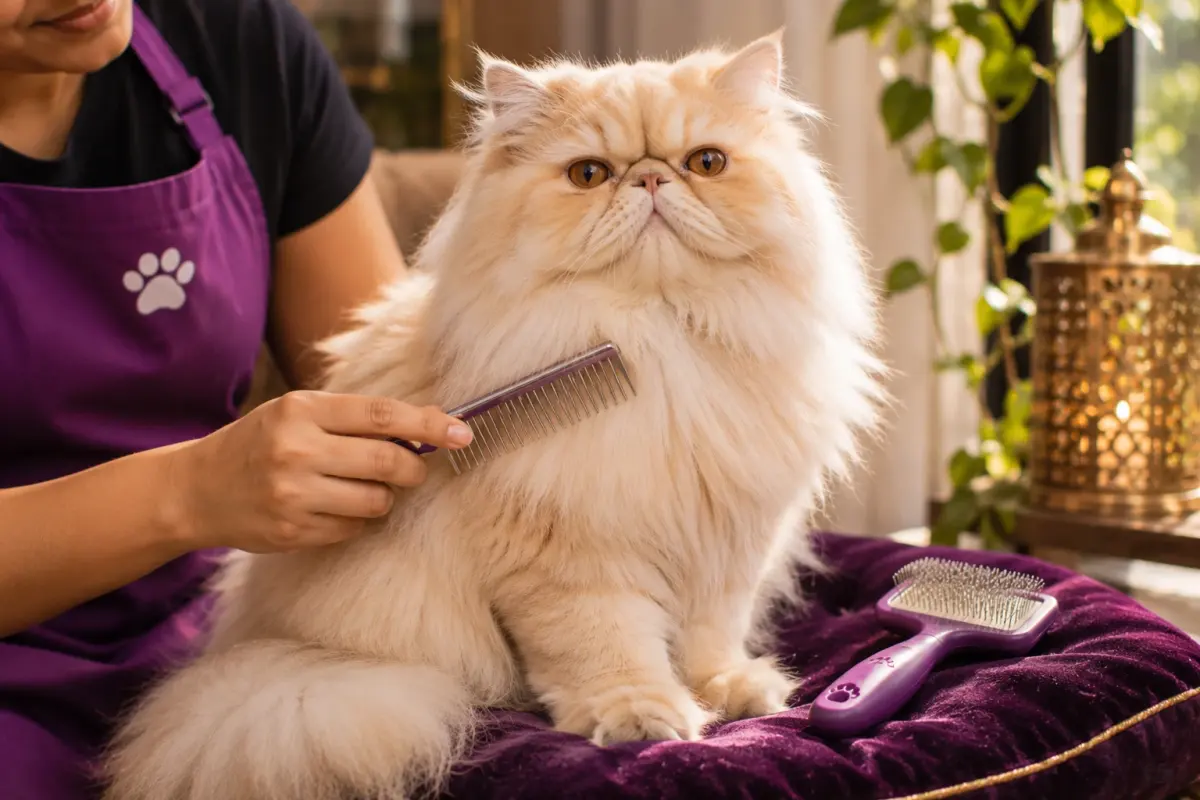
Aundh has had pet services for longer than most of Pune, which means it also has a longer history of cats who had a bad experience somewhere and have not been groomed since. We meet these cats regularly and the conversation is always slightly apologetic, as though the owner did something wrong. They usually did not — they took a cat to a place that groomed dogs and improvised.
A cat that has been scruffed, held in a bag, or left in a cage with a dryer running does not simply forget. It generalises: the bag, the smell of shampoo, a stranger crouching, sometimes just the doorbell. So the first session with us is not really a grooming session. The groomer arrives, unpacks slowly, and lets the cat investigate on its own terms. We may only get claws done. Occasionally we get nothing done beyond the cat deciding this person is not the previous person, and honestly that is a good first visit.
The second visit is where it usually turns. By the third or fourth most of these cats are grooming normally, and a fair number end up easier than cats who have never had a bad experience, because the routine is now familiar and predictable. What makes the difference is not any technique in particular — it is being willing to leave with the job unfinished rather than forcing it, which is the exact thing that went wrong the first time. If your cat is in this category, tell us before booking. It changes how we plan the visit and what we consider a success.
Grooming frequency
The between-sessions routine, minus the marketing.
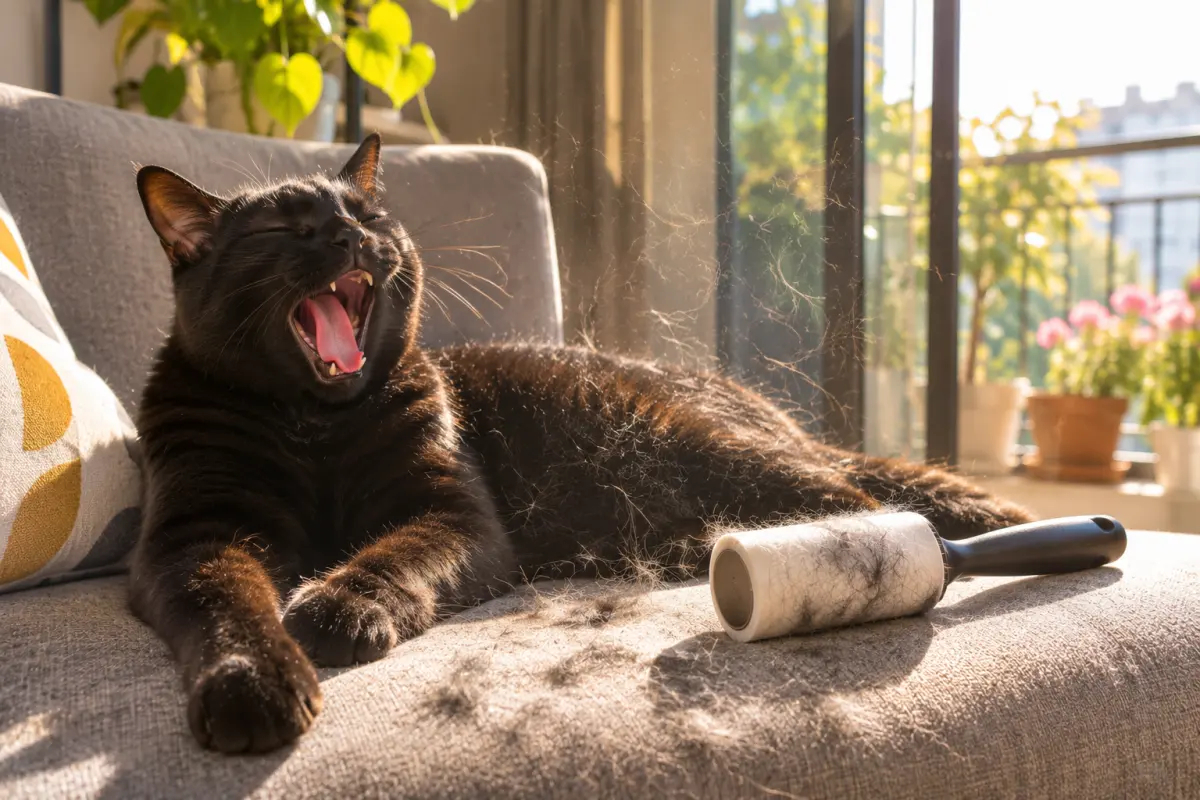
The uncomfortable truth about our own service is that a professional session every six weeks matters less than five minutes of combing a day. We would rather say that plainly than sell you extra visits.
Get the tool right first, because most people have the wrong one. A soft slicker brush is the general-purpose choice for medium and long coats. A steel greyhound comb — the metal one with two tooth spacings — is what actually finds mats, because it reaches the skin where a brush glides over the top; if you buy one thing, buy this. A deshedding tool is for short dense coats like a British Shorthair and should be used weekly at most, since overuse thins the coat. A rubber curry mitt suits shorthairs who dislike being brushed. What you do not need is the multi-piece kit sold online.
Then the technique, which takes a minute to learn. Work in the direction the fur lies, not against it. Start where the cat likes being touched — usually the cheeks and along the back — and finish with the places that actually matter: behind the ears, under the front legs, the belly, the trousers, the base of the tail. Those five spots are where every mat we ever clip out began. Hold the fur at its base with your free hand before pulling a comb through a tangle so the tension is on your fingers rather than her skin.
Do that most days and your Persian goes from needing rescue every visit to needing maintenance. Ask your groomer to show you on your own cat at the end of the session — it lands better than any description.
Hershey is a brown Siamese who communicates her feelings very clearly throughout any grooming session. The Sniffy groomer received the full commentary — every hiss, every protest — and just kept working calmly and efficiently. The whole session was done in under 90 minutes and Hershey came out looking perfect. The groomer said she'd heard much worse, which is reassuring.
Misty had never had her nails trimmed professionally and they'd gotten quite long. I was nervous about it — I'd tried once and she'd scratched me badly. The groomer had a completely different approach, wrapped Misty gently and worked nail by nail with pauses between. All done with no incident. The technique makes an enormous difference.
Yes, at the end of every session we'll give you a recommended schedule based on your cat's coat type, shedding pattern, and condition observed during the session. This isn't a generic answer — it's based on what we actually saw with your cat.
More often than you'd expect, yes. Cats are territorial but they also respond well to a patient, non-threatening approach. A stranger who moves calmly, avoids direct eye contact initially, and doesn't try to pick up the cat immediately is often accepted more easily than owners expect. We've had many sessions that the owner predicted would fail turn out smoothly.
Yes, with appropriate handling. Outdoor cats tend to be more independent and less tolerant of extended handling. We adjust the session accordingly and always include a tick check and inspection for any skin issues that outdoor exposure can cause.
For most cats, a steel greyhound comb — the metal one with wide teeth at one end and fine at the other. It reaches the skin, which is the entire point, since a brush glides over the top of the coat and misses the mats forming underneath. Add a soft slicker brush for a medium or long coat, or a rubber curry mitt for a shorthair who objects to bristles. A deshedding tool is only for short dense coats like a British Shorthair, and weekly at most, because overusing one thins the coat. You do not need the twelve-piece kit. Ask your groomer to demonstrate on your own cat at the end of the session.
Yes, though not in one visit. Cats generalise a bad experience to the whole situation, so the first session is about replacing the association rather than finishing a groom — the groomer unpacks slowly, lets her approach, and may get no further than claws. That is a good outcome and we will not push past it. The turn usually comes on the second visit, and by the third or fourth most of these cats groom normally. Tell us the history when you book so the groomer plans for a partial session from the outset rather than discovering it halfway through.
Yes — Aundh proper, Anand Park, ITI Road, Sangvi, Pimple Gurav, Pimple Saudagar, Bopodi and across to Khadki and Baner are all on the same route. This is one of our better-covered corridors, so short-notice weekday slots are more often available here than in the outer areas. Send a location pin if your society sits somewhere ambiguous between Sangvi and Pimple Gurav and we will confirm before you book.
No. Groomers arrive by two-wheeler with the entire kit in a shoulder bag — nothing is unloaded at your gate and no four-wheeler needs a bay. It is exactly why this works on the narrow lanes off Bremen Chowk and through the older parts of Aundh.
Before, by a few days. A cat going into boarding with a mat-free coat and short nails is far easier for the facility to handle and much less likely to come home with a coat problem — boarding stress often means a cat stops self-grooming properly for the duration. A session afterwards is reasonable too, but doing it beforehand is what prevents trouble.
In early pregnancy, usually yes, with a short and gentle session and no pressure on the abdomen. In the last two to three weeks we would not bathe a cat at all — the handling and the stress are not worth it, and a queen close to term should be left alone. Tell us at booking, and if you are unsure how far along she is, ask your vet before you book.
It comes off for the session and goes back on before the groomer leaves. A collar traps moisture against the neck during a bath, and the fur underneath is one of the places we most often find matting that owners have never seen because the collar hides it. Worth checking that area yourself between visits too.
Treat the cat with a cat-specific product and treat the house, in the same week. This is genuinely important: permethrin-based flea products meant for dogs can be fatal to cats, so never apply a dog treatment to a cat or let a treated dog sleep pressed against one. Our session removes what is on the cat, but eggs in bedding and floor cracks re-infest within days unless the environment is dealt with too.
Honest, practical advice from the groomers who visit Pune homes every day.