






SPA BATH
₹799 ₹999
- Bath With Premium Shampoo
- Nourishing Coat Conditioner
- Blow Dry
- Combing/ Brushing
- Nail Clipping
- Eye & Ear Cleaning
- Paw Massage
- Mouth Spray
- Spritz of Perfume
Also serving nearby: Koregaon Park, Shivajinagar, Khadki, Wanowrie, Hadapsar, East Street.
Published, fixed prices — the same across every area of Pune we cover. Cat grooming in Camp starts at ₹799, there is no doorstep or travel fee, and payment is taken at the end of the session by cash or UPI once you have seen the work.
₹799 ₹999
₹999 ₹1199
₹1299 ₹1499
Add-ons are quoted before the groomer starts, never added at the end.
Prices, coverage & reviews last updated
Cat grooming
They deserve grooming that respects that.
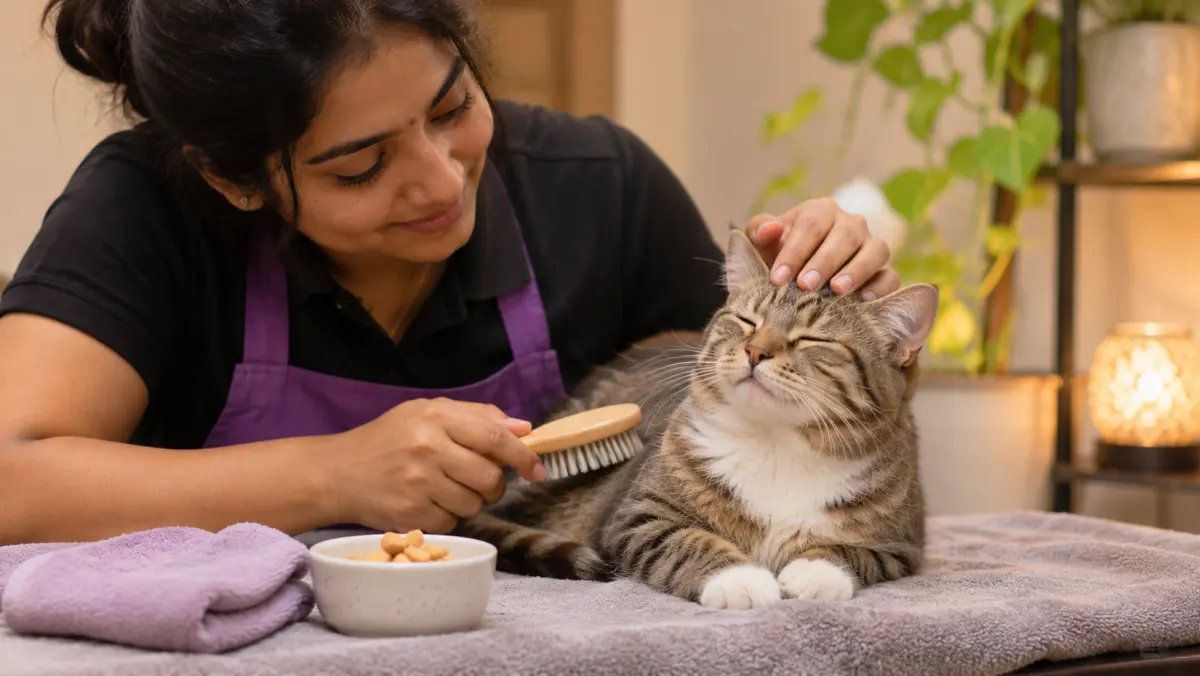
Camp is one of Pune's oldest neighbourhoods — bungalows with gardens, flats in heritage buildings, a pace of life that still has some grace to it. The cats here often share that character — older, more settled, deeply territorial, and somewhat allergic to change. In-home cat grooming suits Camp perfectly. We come to the cat's environment, work within it, and leave without disrupting anything more than necessary.
Pune seasons
Older building materials affect air quality differently.
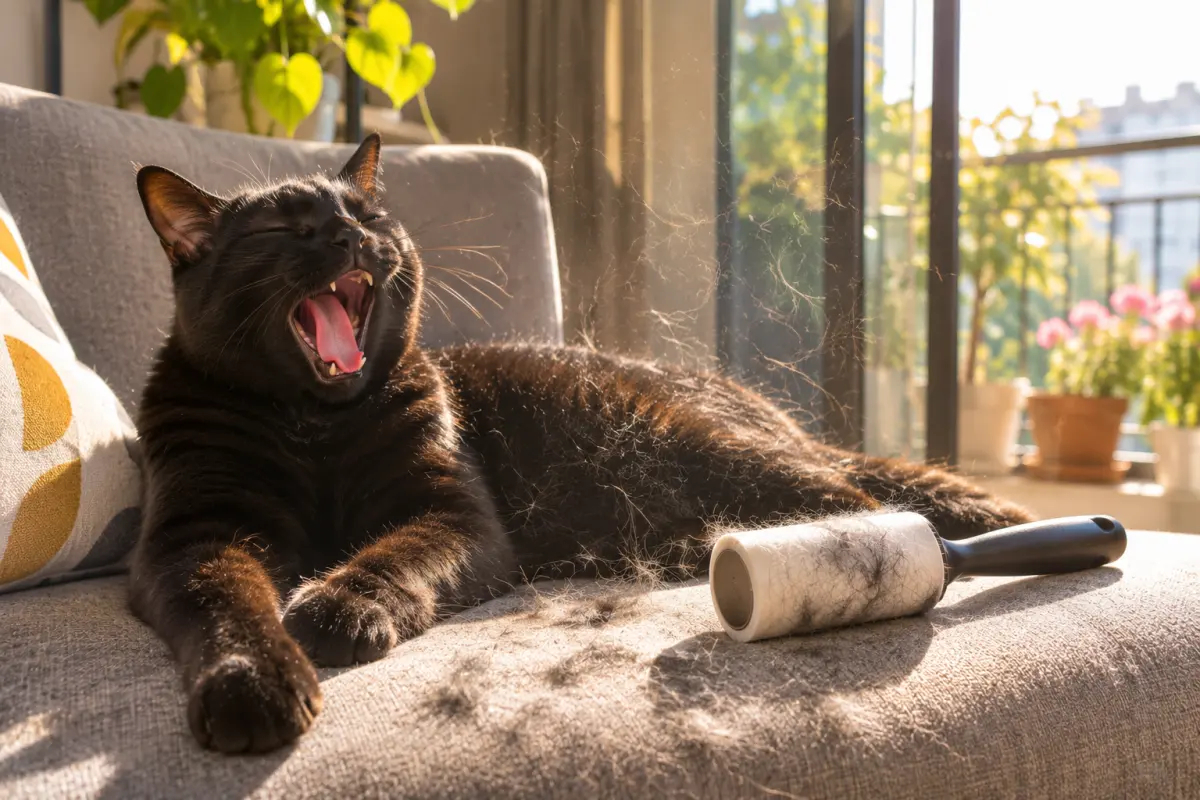
Camp's older buildings hold humidity differently than modern construction — concrete-and-glass apartments are dryer, while older bungalows can be damper. Both extremes affect cat coat health in different ways. Our groomers note the environment at each session and adjust products accordingly — drier environments get heavier conditioning treatment, damper environments benefit from lighter, antifungal-enhanced products.
By breed
Old Pune character, varied cat personalities.
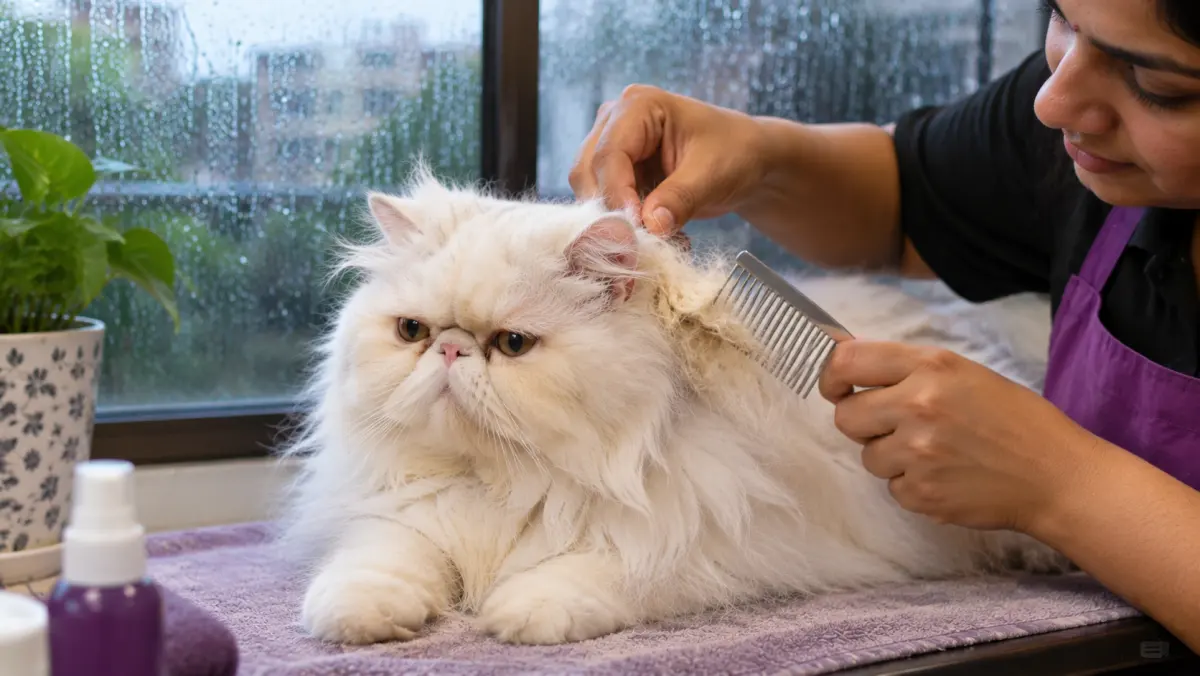
Camp has a wonderful range of cats — from long-established household cats to newer adoptees. Here's what we see most often:
All of Camp, Boat Club Road, East Street area — covered.
Pune seasons
Camp's buildings hold moisture longer than anywhere else in the city.
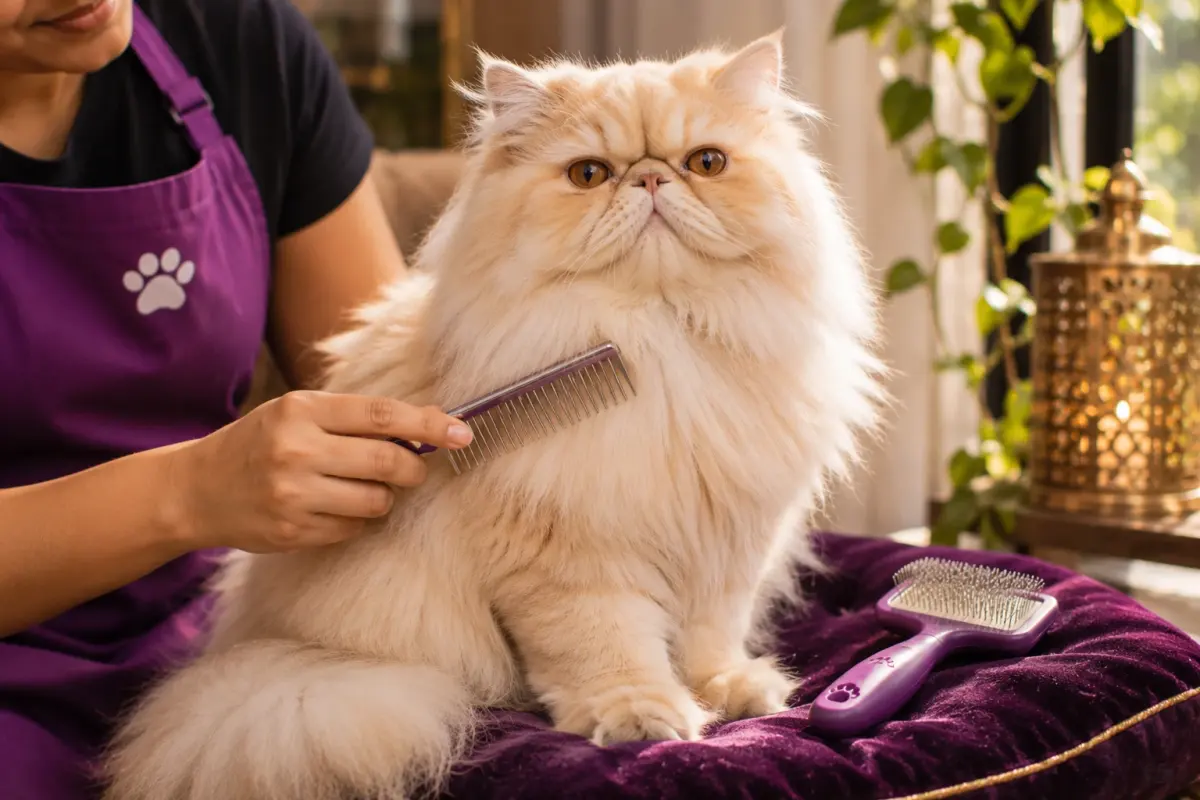
The buildings that give Camp its character — thick masonry, high ceilings, deep verandahs, decades of paint — also hold damp in a way modern construction does not. Through July and August the walls of an old Camp flat stay cool and slightly humid for weeks, and the floors near a courtyard or a shaded side never quite dry out.
That environment favours one specific problem: fungal skin infection. Ringworm, despite the name, is a fungus rather than a worm, and it thrives in exactly these conditions. On a cat it usually appears as a small circular patch of thinning fur with slightly scaly skin, often on the face, the ears or a front leg, and it is the most common infectious skin condition in cats anywhere. It is also transmissible to people, which is the part worth knowing in a household with children or older relatives.
Our groomers in Camp look for it as a matter of course during the dry inspection, before any water goes near the coat. If we see something suspicious we stop, do not bathe over it, tell you exactly where it is, and recommend a vet — because a bath spreads fungal spores around the coat and around the flat, and a groomer working on an infected cat can carry it to the next house. Where a cat has a confirmed history, we bring an antifungal formula and use dedicated equipment. Alongside that, monsoon paw care matters here more than in the newer suburbs: fur between the toes stays wet on damp stone floors, and that is a second place fungal trouble starts. We trim it flush at every session through the rainy months.
At your doorstep
Camp homes tend to be full. We plan around that.
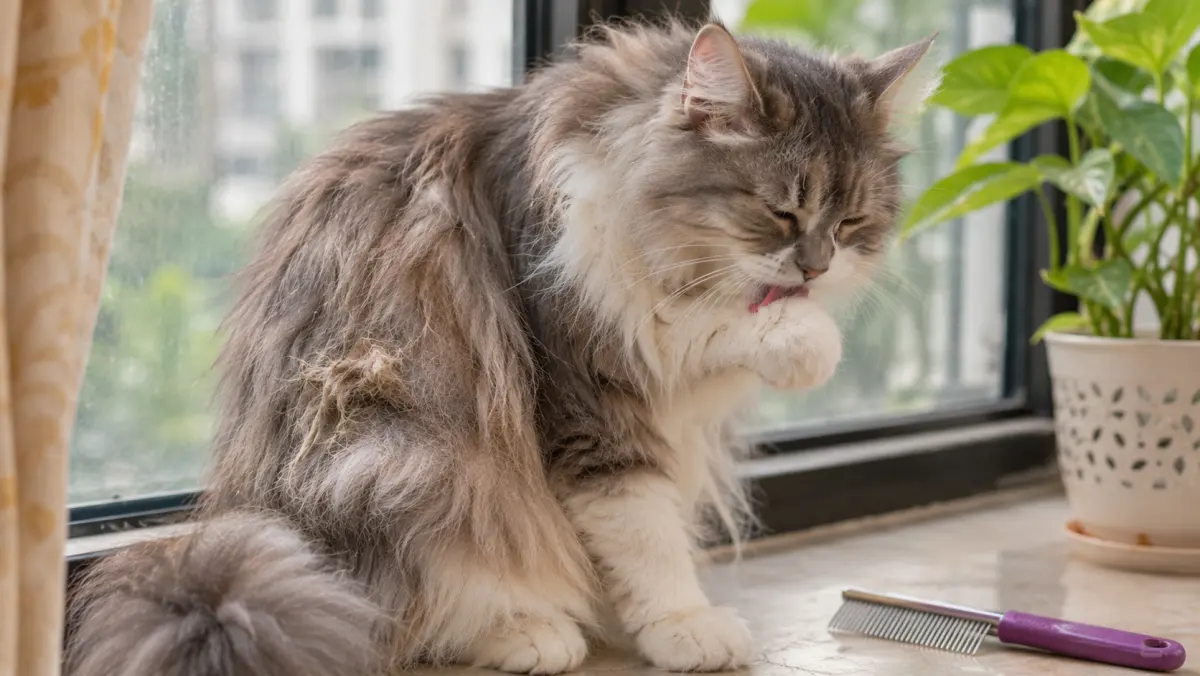
A lot of the households we visit in Camp are multi-generational, long-established, and populated by more than one species. A cat, an old dog, a pair of budgies in the verandah, sometimes a rabbit. It makes for lovely homes and slightly more complicated grooming visits.
The main thing is separation, and it is worth doing before we arrive rather than during. The dog goes in another room with the door shut for the whole session — not because anything will go wrong, but because a cat already managing a stranger and a dryer does not need an interested dog as well, and most dogs find the grooming bag fascinating. Birds should be in a different room too, with the door closed: they are far more sensitive to airborne particles and disturbance than people expect, and a dryer running for half an hour in the same room is genuinely stressful for them.
The other consideration in a multi-pet home is cross-contamination, which is a real risk rather than a theoretical one. Ringworm and ear mites move between animals easily, and a groomer's combs are an efficient way to help them. We clean and disinfect equipment between every animal, use fresh towels each time, and if one animal in the house has a known skin issue we do that one last. If you are booking the cat and the dog together, the cat goes first — cats cope with waiting far worse.
Empress is an 8-year-old Siamese who has lived in the same Boat Club Road flat since she was a kitten and has strong opinions about her territory. She tolerated grooming at home far better than she ever did at the salon — being on her own turf made a visible difference in how she behaved. The groomer handled her very professionally. Empress was vocal but never genuinely hostile.
Hercules is a big, fluffy mixed-breed longhair who has a dramatic response to everything. I was nervous about bringing a stranger home for grooming. The groomer was completely calm about it — let Hercules bluster, waited him out, and then did a thorough and professional session. Hercules was back to his usual self within the hour. Really well handled.
Yes, absolutely. Our setup requires only a clear surface, water access, and a power outlet. We can work in a bathroom, kitchen, or any room with basic utilities. Heritage buildings and bungalows are not a problem.
Long-established cats are often more settled and predictable than younger cats, which can actually make grooming easier. They have their routines and expectations but they've also seen enough of the world to not panic at a calm stranger. The home environment helps enormously for these cats.
Tips are warmly appreciated by our groomers and can be given directly in cash at the end of the session. They're entirely optional.
We can spot the signs, though only a vet can confirm it. What we look for during the dry inspection is a small circular patch of thinning fur with slightly flaky skin underneath, most often on the face, ears or a front leg. If we find something like that we will stop rather than bathe over it — washing spreads fungal spores through the coat and around the room — and tell you exactly where it is so your vet can test. It is worth taking seriously in a shared household, since ringworm passes to people, and it is more common in Camp's older damp buildings than in the newer suburbs.
Only in where we work. Please move the birds to a different room with the door closed, or let us set up well away from them. Birds have far more sensitive respiratory systems than cats or people and are genuinely stressed by a dryer running nearby for half an hour. It is also simpler for the cat, who does not need the extra stimulation. We will not use any aerosol or fragrance product in the house, so there is nothing else to worry about on that front.
Yes — residential space above commercial premises is common through Camp and it is not a problem, provided there is a bathroom or a water point and somewhere to lay a mat. Two things help: tell us the access route, since the entrance is often a side stair rather than the shopfront, and pick a slot when the shop below is quiet if you can. Cats manage the noise of a busy street better than most people expect, but a quieter hour makes for a calmer session.
Only your gate's normal process. The groomer carries photo identification and we can send their name and number ahead of the slot so entry can be logged in advance. Cantonment properties are stricter about pre-notification than civilian societies, so it is worth arranging beforehand rather than at the barrier.
No, and that is the whole point of it. The groomer arrives by two-wheeler with the kit in one shoulder bag, so the tight lanes and absent parking around East Street change nothing — and your cat never sees a carrier or a car. For most cats the journey was always the worst part of grooming rather than the grooming itself.
Rarely. The groomer needs a tap for perhaps fifteen minutes and one working plug point for the dryer. Old bungalows sometimes have both a long way from where the cat is comfortable — if the nearest usable socket is in another room, mention it and the groomer will bring the working area to the plug rather than move the cat around the house.
The smallest quiet room that can be shut, with a tap nearby. A big house sounds like an advantage but it is the opposite for a cat session — more space means more places to bolt to and a much longer settling period. A contained room is calmer for the cat and safer for everyone in it.
Yes, and ideally in a different room entirely. A cat that can see or hear caged birds will not settle under handling, and the stress runs both ways — the birds react to a distressed cat as much as the cat reacts to them. It costs you two minutes beforehand and makes a visible difference to how the session goes.
Honest, practical advice from the groomers who visit Pune homes every day.